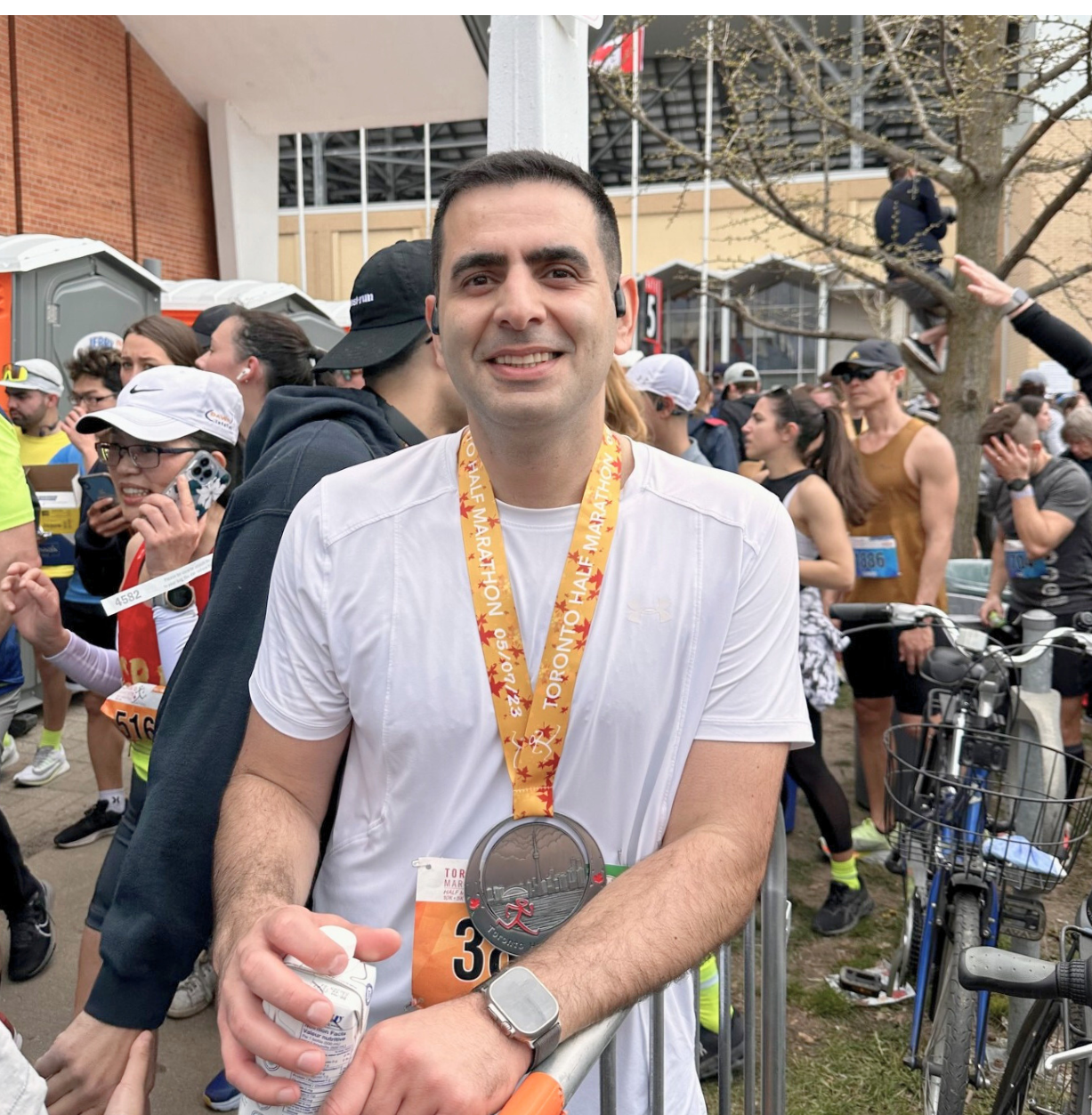
Let's be honest: starting to run is intimidating.
Maybe you have tried before and quit after three days. Maybe you get winded walking up stairs. Maybe the idea of "going for a run" sounds as realistic as climbing Everest.
Here's the truth: every single runner started exactly where you are now.
This guide from the Crewa running app is for complete beginners. Not "I used to run in high school" beginners. Total, absolute, gasping-after-100-meters beginners.
If that's you — welcome. Let's start.
📚 Part of Our Toronto Running Series
This guide focuses on absolute beginners. Once you're running consistently, check out our Ultimate Guide to Running in Toronto for routes, run clubs, and races. For finding running partners, see How to Find Running Partners in Toronto.
Why Start Running? 🏃
Before we get into the "how," let's talk about the "why." Because you will need a reason to keep going when it gets hard.
The Physical Benefits
- Cardiovascular health — Your heart gets stronger. Blood pressure drops.
- Weight management — Running burns 80-100 calories per kilometer.
- Bone density — Weight-bearing exercise strengthens bones.
- Sleep quality — Regular runners report better sleep.
- Energy levels — Counterintuitively, expending energy gives you more energy.
The Mental Benefits
- Stress relief — Running is moving meditation.
- Mood boost — The "runner's high" is real.
- Confidence — Accomplishing something hard changes how you see yourself.
- Mental clarity — Some of your best thinking happens mid-run.
The Practical Benefits
- Free — No gym membership required.
- Anywhere — Your workout travels with you.
- Efficient — 30 minutes of running = 60+ minutes of most other cardio.
- Social — Toronto has 50+ free run clubs for every level.
"The miracle isn't that I finished. The miracle is that I had the courage to start." — John Bingham
The Right Mindset 🧠
Most people fail at running not because their body can't do it, but because they approach it wrong mentally.
What Beginners Get Wrong
- Going too fast — Your easy pace should feel embarrassingly slow.
- Focusing on distance — Focus on time, not kilometers.
- Expecting linear progress — Some days will be harder than last week.
- Comparing to others — Their journey is not your journey.
- Thinking it should feel good — It doesn't at first. It gets better.
What Actually Works
- Consistency over intensity — 3 easy runs beats 1 hard run.
- Permission to walk — Walking is part of running. It's not giving up.
- Celebrate showing up — You ran today? That's the win.
- Trust the process — Your body adapts. It just takes time.
🧨 Beginner Running Myths — Busted
"I'm too out of shape to start running"
Running adapts to any fitness level. That's why the run/walk method exists.
"Real runners don't walk"
Many marathon runners use planned walk breaks. Jeff Galloway built his methodology on run/walk.
"I need to be able to run 5K to call myself a runner"
If you run, you're a runner. 1 minute or 1 hour — you're a runner.
The Run/Walk Method: Your Secret Weapon 🚶♂️🏃
This is the single most important concept for beginners. It's not a crutch — it's a strategy used by beginners and marathon finishers alike.
How It Works
Instead of trying to run continuously (and failing), you alternate between running and walking in set intervals.
Week 1 Pattern
Run 1 minute, walk 2 minutes — repeat for 20-25 minutes
Why It Works
- Prevents burnout — You recover before you're exhausted
- Reduces injury risk — Less continuous stress on joints
- Builds endurance sustainably — Your body adapts without breaking down
- Psychological wins — Every walk break is a small victory
💡 Pro Tip: Use a Timer
Download a free interval timer app (like "Seconds" or just use your phone timer). Set it to beep when it's time to switch.
The 8-Week Zero to 5K Plan 📅
This is your complete roadmap from "I can't run at all" to completing your first 5K. Follow it exactly — don't skip ahead.
Your 8-Week Journey
From first step to 5K finish line
Build the Habit
Your only goal: show up 3 times. Don't worry about speed or distance. If 1 minute feels too hard, start with 30 seconds.
Extend Intervals
Increase running time, decrease walking. You should start feeling a rhythm forming.
Longer Continuous Running
Now you're running for real stretches. Walk breaks are still part of the plan. By end of week 6, try running 10 minutes straight.
5K Ready
You can now run continuously for 20+ minutes. That's 5K territory. Sign up for Downsview parkrun (free, every Saturday) and complete your first 5K!
🔗 Free First 5K
Downsview parkrun is a free, timed 5K every Saturday morning at 9am. Walkers are welcome. It's the perfect first "race." Other Toronto parkruns: High Park, Sunnyside.
💡 Starting running is easier with support. The Crewa running app matches you with beginner running partners in your neighborhood — same pace, same goals.
Find Beginner PartnersEssential Gear (Keep It Simple) 👟
You don't need much to start running. Here's what actually matters — and what can wait.
Beginner Running Gear Checklist
The Most Important Investment: Running Shoes
This is the one thing you should not cheap out on. Wrong shoes = injuries. Right shoes = everything feels better.
Where to Get Fitted in Toronto
- BlackToe Running — Multiple locations, expert fittings, free community runs
- The Runners Shop — Yonge & Eglinton, veteran-owned, personalized service
- Running Room — Multiple locations, beginner-friendly
Budget: Expect $150-200 CAD. This is cheaper than a gym membership and prevents the injuries that sideline most beginners.
⏳ What Can Wait
You do NOT need: a GPS watch, fancy running clothes, gels/nutrition, a foam roller, or any apps. Start with shoes and whatever athletic clothing you already own. Add gear later as you get more serious.
Beginner-Friendly Routes in Toronto 📍
Not all routes are created equal for beginners. Here are the best options — flat, well-paved, with easy bail-out points.
Martin Goodman Trail
Ideal for BeginnersToronto's #1 beginner route. Completely flat, fully paved, well-marked. Start at Harbourfront and go as far as you want — easy to turn back anytime.
Beltline Trail
Ideal for BeginnersFormer railway corridor through midtown. Car-free, mostly flat, with easy exit points. Less crowded than the waterfront.
High Park Main Roads
Good for BeginnersStick to the main paved roads (not trails) for easier footing. Some gentle hills to build strength. Beautiful scenery keeps you motivated.
Your Neighborhood
Most ConvenientYour neighborhood sidewalks are perfect for starting. Zero commute, familiar surroundings, easy to bail. Map a simple 2-3km loop from your door.
📍 More Routes
Once you're comfortable, explore our complete 13 Best Running Routes in Toronto guide with detailed maps and seasonal tips.
Common Beginner Mistakes ⚠️
I've made all of these. Learn from my pain.
1. Running Too Fast
The fix: Slow down until you can hold a conversation. Your easy pace should feel almost too easy.
2. Doing Too Much Too Soon
The fix: Follow the 10% rule: don't increase weekly running time by more than 10%.
3. Skipping Rest Days
The fix: Rest is when adaptation happens. Take at least 1-2 days off between runs as a beginner.
4. Wrong Shoes
The fix: Get professionally fitted at a running store. This single investment prevents most beginner injuries.
5. Ignoring Pain
The fix: Discomfort is normal. Sharp pain is not. If something hurts, stop.
6. Giving Up After Bad Runs
The fix: Bad runs happen to everyone. It's the pattern over months that matters.
What Progress Actually Looks Like
Spoiler: it's not linear, and that's okay
Warm-Up & Cool-Down 🔥
Beginners often skip this. Don't. A proper warm-up prevents injury and makes your run feel easier.
Before Your Run: 5-Minute Warm-Up
- Walk briskly for 3-5 minutes
- Leg swings — 10 each leg
- Hip circles — Both directions
- Ankle circles — Both directions
- High knees — Light and easy, 30 seconds
Do NOT do static stretching before running. Research shows it can decrease performance and increase injury risk. Save that for after.
After Your Run: Cool-Down
- Walk for 3-5 minutes
- Static stretches (now it's safe!) — hold each 20-30 seconds: calf stretch, quad stretch, hamstring stretch, hip flexor stretch
📖 More Detail
For a complete warm-up routine, see the warm-up section in our Ultimate Toronto Running Guide.
Finding Support: You Don't Have to Do This Alone 🤝
Here's a truth most running guides don't tell you: starting running alone is hard. Not the physical part — the showing-up part. Having someone else involved dramatically increases your chances of sticking with it.
Why Accountability Works
- Social commitment — Harder to bail when someone's waiting
- Shared suffering — Misery loves company (and it helps!)
- Learning faster — Tips, route knowledge, gear advice
- Safety — Especially important for early morning or evening runs
Options for Toronto Beginners
Beginner-Friendly Run Clubs
- BeneFIT Pro Run Club — Social 7:30/km pace, explicitly beginner-friendly
- I Don't Run Club — Founded for people who don't naturally love running
- Running Room Learn to Run — Structured beginner clinics
- Lululemon Community Runs — All-paces welcome
Free Weekly Events
- Downsview parkrun — Free timed 5K every Saturday 9am. Walkers welcome.
🤝 Run Clubs vs. Matched Partners
Traditional Run Clubs
- Fixed schedule (1-2x per week)
- Large groups (10-100 people)
- Mixed paces
- Set locations
- Great for social energy
Matched Partners (Crewa)
- Flexible — run when you want
- Small crews (2-4 people)
- Matched by YOUR pace
- Your neighborhood
- Great for real accountability
For a complete guide to finding running partners, see our How to Find Running Partners in Toronto article.
Frequently Asked Questions
Common questions from complete beginners — answered directly.
How do I start running if I've never run before?
Start with the run/walk method: alternate short running intervals (30-60 seconds) with walking breaks (1-2 minutes) for 20-25 minutes total. Do this 3 times per week. The Crewa running app can match you with beginner partners at your pace.
What running shoes should beginners buy in Toronto?
Visit a specialty running store like BlackToe Running, The Runners Shop, or Running Room for a professional fitting. Expect to spend $150-200 CAD.
Is it normal to feel out of breath when starting to run?
Yes — but it means you're running too fast. Slow down until you can hold a conversation (the "talk test"). Your pace should feel embarrassingly slow.
How often should beginners run?
Start with 3 days per week with at least one rest day between runs. Consistency over weeks matters more than frequency within a single week.
How long does it take to go from non-runner to 5K?
Most beginners can complete a 5K within 6-8 weeks. Walk breaks are completely normal. Downsview parkrun is a perfect free first-5K event.
What is the run/walk method?
The run/walk method alternates running intervals with walking breaks. Many experienced marathoners still use it — it's a strategy, not a weakness.
How slow should beginners run?
Slower than you think. Your easy pace should allow you to hold a conversation. Running slower is how you build endurance to eventually run faster.
Where should beginners run in Toronto?
The Martin Goodman Trail is ideal — flat, paved, well-marked. The Beltline Trail is another great option. Or just map a loop in your neighborhood.
Do I need to stretch before running?
Skip static stretching before running. Do a 5-minute walking warm-up and dynamic movements instead. Save static stretches for after.
How do I avoid injuries as a beginner runner?
Follow the 10% rule. Get properly fitted running shoes. Take rest days. Do a walking warm-up. Stop if you feel sharp pain.
Are there beginner-friendly run clubs in Toronto?
Yes! BeneFIT Pro Run Club, I Don't Run Club, and Running Room Learn to Run clinics. The Crewa running app also matches beginners with other beginners.
What's the best time of day to run in Toronto?
Whenever you'll actually do it consistently. Avoid 11am-3pm in summer. In winter, midday is warmest.
You're Ready to Start 🎉
That's everything you need to know to begin.
- This week: Get fitted for proper running shoes at a local running store
- Tomorrow: Do your first run/walk session — 20 minutes, run 1 min / walk 2 min
- This month: Complete Week 1-2 of the plan (3 sessions per week)
- In 8 weeks: Finish your first 5K at Downsview parkrun
You don't need perfect conditions. You start, and the shape comes.
Welcome to running. 🏃